★★★★★5.0 on Google

Grand opening · $497 in Falmouth

Heart and vascular imaging —
without the hospital.

We look at your heart, the arteries in your neck, and the large artery in your abdomen. It is the same scan a hospital does. A heart doctor reads it and signs your report.

Board-certified cardiologist reads it No referral needed Same-week appointments Report in 24–48 hrs
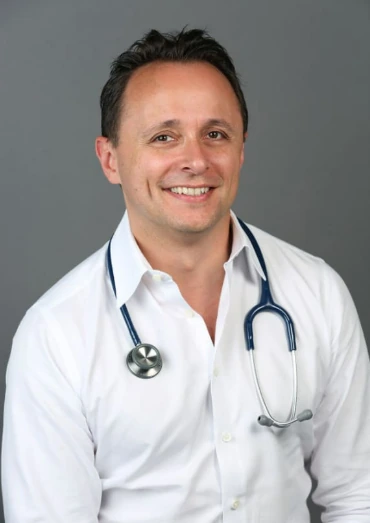
Emanuel Papadakis Dr. Glenn Gandelman
Scanned by Emanuel Papadakis, registered cardiac and vascular sonographer
Read and signed by Dr. Glenn Gandelman, MD, FACC
Cover of The Cardiovascular Blind Spot
Free guide
The Cardiovascular Blind Spot What each of the three scans looks at, in plain words. In your inbox in about a minute.

* Required

No spam. Unsubscribe in one click. No obligation.
Inside: the grand-opening price, already applied when you book. Three scans in one visit, $497 in Falmouth, for the first 75 patients. Ends December 31. No referral. Report in 24 to 48 hours.
Why check now

Why check now

A physical checks your risk. A scan looks inside.

In nearly 20 years of scanning, the most common thing patients tell me is that they had no symptoms beforehand. That is not denial — it is how cardiovascular disease progresses. A study is a look at what is there while someone still feels well, when anything found is still small.

50.5%
of 4.6 million US patients with a first heart attack had no documented symptoms beforehand.
European Heart Journal, 2025 (first heart attacks, 2017–2022)
Up to80%
of strokes are preventable, according to the American Heart Association. Carotid plaque is one contributor, and it is measurable on ultrasound.
American Heart Association, 2024
65–75
the age range for which a one-time screening ultrasound is recommended for men with any history of smoking. Found early, an aneurysm is measured and monitored.
U.S. Preventive Services Task Force

What a physical checks — and what a scan sees

Tap to compare
Risk factors — the odds that something is growing
  • Cholesterol
  • Blood pressure
  • Blood sugar
  • Weight
  • Family history
  • Smoking status

These are clues. They guess the odds. Helpful — but not the same as looking.

Findings — what is really there right now
  • Plaque, and how big it is
  • How wide the aorta is
  • Heart valves, and if they leak
  • How well the heart pumps
  • How fast blood is moving
  • A clot, or no clot

These are pictures. Two people can have the same numbers and very different arteries. A scan shows which one you are — while anything there is still small.

What a scan finds while you feel fine

Neck artery scan (carotid)

Plaque in the arteries to the brain

It builds for years before it does anything. It is silent. And we can measure it.

A number a physician can act on. Plaque is measured, and any narrowing is graded in percent.
Heart scan (echocardiogram)

The heart’s pump and valves

A weak pump or a leaky valve can be there for years before you feel a thing. A normal EKG does not see it.

A starting point, while it beats. Heart size, wall thickness, the valves, and how well it pumps — measured now, and checked over time on your schedule, not a hospital’s.
Abdominal aorta scan (AAA)

A widening of the body’s main artery

An aneurysm usually gives no signs at all until it tears. Most are found by luck, on a scan done for something else.

We measure how wide it is. Small ones are watched. Big ones are fixed on a planned day. The USPSTF advises a one-time scan for men 65 to 75 who have ever smoked. Our package includes it for men and women alike.

A study is a one-hour look while you feel fine. That way a problem stays small, and does not turn into an emergency. The guide explains what each of the three scans looks at, in plain words.

Get the Free Guide

What the wait really looks like

Nobody shows you the whole path.

Same scan, same machine, same kind of report. Two very different ways to get it.

Through the system
4–6 months
From asking your doctor to hearing your results, as I see it working in hospital imaging
  1. Ask your doctor for a referral
  2. Wait for it to be approved
  3. Wait 4–8 weeks for a scan slot
  4. Take time off work — scans run in business hours
  5. Results go to the doctor who ordered them
  6. Wait again for a visit to hear them
  7. The bill comes later. You do not know the amount
With BlackPoint
24–48 hours
From your scan to a signed report in your inbox
  1. Book online. No referral, no approval needed
  2. Usually seen the same week
  3. Evenings and weekends, or you come to our Falmouth imaging center
  4. About an hour. No needles, no radiation
  5. A heart doctor reads it
  6. The report comes to you, in 24–48 hours
  7. One price. You know it before you book

From patients in Southern Maine

Rated 5.0 by the people we scanned.

5.0
★★★★★
Google reviews
Same equipment that was used in a prestigious DC area hospital.
Google review
★★★★★Echocardiogram
Excellent experience right in my own living room!
Google review
★★★★★
The atmosphere of the office was clean, quiet and calming. I was able to get scheduled quickly and received my results the very next day.
Google review
★★★★★
He was very down to earth, and friendly. Made the ultrasound not feel as cold and medical, a much more relaxed feel to the appointment.
Google review
★★★★★
It is great to be able to know up front the cost of testing and to have complete, accurate results with measurements included to send to my PCP.
Google review
★★★★★
This process was simple to understand. I felt safe and respect which is huge for me. He talked to me and 40 minutes flew by like that.
Google review
★★★★★
He was very professional, kind, and took the time to explain everything he was doing during the procedure, which really helped put me at ease. I received my results within 48 hours, which was impressive.
Google review
★★★★★

Who scans, who reads

Two people. Both do this all week.

Emanuel Papadakis
Does every scan
Emanuel Papadakis
Registered Diagnostic Cardiac Sonographer (RDCS) and Registered Vascular Technologist (RVT) · nearly 20 years of hospital heart & vascular ultrasound

Certified in both heart and vascular ultrasound. He does every scan himself. It is never handed off.

Dr. Glenn Gandelman
Reads and signs every report
Glenn Gandelman, MD
MPH · FACC · FASE · Board-certified cardiologist

Medical director. He reads every scan and signs every report. Same standard as a hospital, with his name on it.

What you get

Not a printout. A heart doctor's report.

People ask me if this is the same as a hospital scan. It is. Same machines. Same measurements. And a board-certified cardiologist signs the results.

  • Every measurement a hospital heart lab records, in the same report
  • Read and signed by Dr. Gandelman in his own IAC-accredited lab, for echocardiography and vascular testing
  • Sent to you by secure email. Share it with any doctor you choose
Get the Free Guide
I work in hospital imaging. I see the schedule. I started this so people would not have to wait for it. Emanuel Papadakis · registered cardiac and vascular sonographer, founder
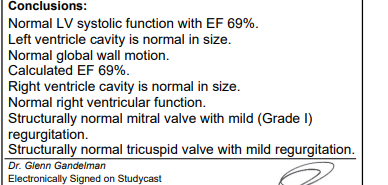
Cardiologist signed Conclusions section of an echocardiogram report, electronically signed by Dr. Glenn Gandelman

The end of a real report. Yours comes the same way: measurements, findings, results, signature.

Our standard

Every study, done the way a hospital lab does it.

  • The complete study a doctor would order from a hospital lab, not a quick check
  • Scanned by a registered cardiac and vascular sonographer (RDCS, RVT), nearly 20 years
  • Read and signed by a board-certified cardiologist, in an IAC-accredited lab
  • Every measurement in your report, with its normal range beside it
  • Your images kept on file, so next year can be compared

Before you ask

The questions people ask before they book.

Who sees my results?

Your report goes to you directly. Nothing is shared with an insurer, an employer, or anyone else without your say-so. Because you are paying us rather than a plan, there is no claim trail to follow you around. Your scans stay on file here, so there is something to compare against next year.

What happens at the visit?

You lie down. We apply some gel and use a small ultrasound probe on the skin. Nothing enters your body. No needles, no radiation. The three scans run back to back in about an hour. Do not eat for 4 hours beforehand, so the view of the main artery in your abdomen is clear. Water is fine, and take your usual medications as normal. Wear loose, comfortable clothes. You drive yourself home after.

Do you take insurance?

No. BlackPoint is private pay. That is what removes the referral and the wait. One price, told to you before you book. You get an itemised receipt, which you are free to send to your insurer.

Where do I go?

170 US Route 1, Suite 190 in Falmouth, Maine. Evenings and weekends too. Or we bring the equipment to your home.

Now open in Falmouth

Three scans, one visit.

A heart scan, a neck artery scan, and an abdominal aorta scan. The heart, the arteries that feed the brain, and the body’s main artery. Three reports, read by a heart doctor, from one visit of about an hour.

  1. ~1 minThe guide and the booking code land in your inbox
  2. Same weekUsually seen within days — evenings and weekends, or at our Falmouth imaging center
  3. 24–48 hThe heart doctor’s signed report, sent to you
Heart scan + neck artery scan $697
Abdominal aorta scan $397
Booked separately $1,094
Grand-opening price $497
You save $597

The price ends December 31, or with the 75th booking if that comes first. Grand-opening visits are being booked now. The code comes with your guide — and the guide is free either way.

Free guide
Read it first, then decide. Written by the person who does every scan.

* Required

No spam. Unsubscribe in one click. No obligation.
Get the Free Guide