★★★★★5.0 on Google

No referral needed · Falmouth, Maine

Hospital-grade heart and vascular screening —
without the hospital.

We look at your heart, the arteries in your neck, and the large artery in your abdomen. It is the same scan a hospital does. A heart doctor reads it and signs your report.

Hospital-grade equipment No referral needed Same-week appointments Report in 24–48 hrs
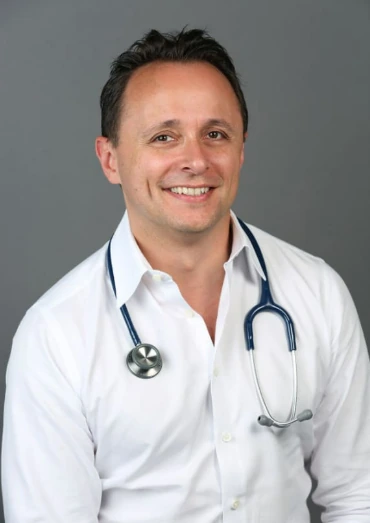
Emanuel Papadakis, RDCS, RVT Dr. Glenn Gandelman
Scanned by Emanuel Papadakis, RDCS, RVT
Read and signed by Dr. Glenn Gandelman, MD, FACC
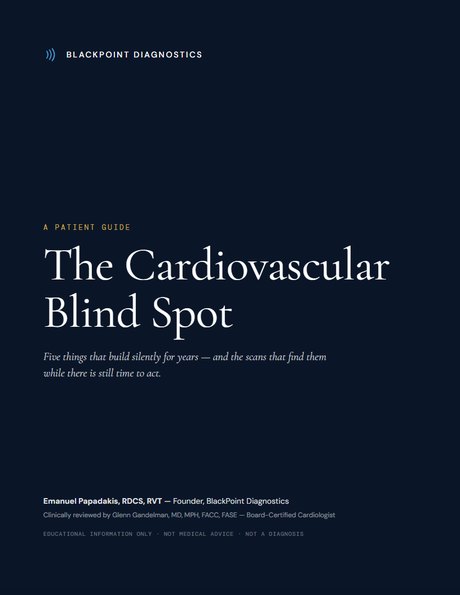
Cover of The Cardiovascular Blind Spot
Free 8-page guide
The Cardiovascular Blind Spot What each of the three scans measures, and why cardiologists order them. In your inbox in about a minute.

* Required

No spam. Unsubscribe in one click. No obligation.
Inside: the grand-opening code. Three scans in one visit, save $597. Only 75 spots at that price. Scan the same week. Report in 24 to 48 hours.
Why check now
5.0
Google rating
24–48h
Scan to report
20yrs
Hospital scanning
0
Referrals needed

Why check now

A physical checks your risk. A scan looks inside.

In 20 years of scanning, the most common thing patients tell me is that they had no symptoms beforehand. That is not denial — it is how cardiovascular disease progresses. A screening is a look at what is there while someone still feels well, when anything found is still small.

50.5%
of first heart attacks in this dataset occurred without preceding warning signs.
First myocardial infarction dataset, 2017–2022
80%
of strokes are preventable, according to the CDC. Carotid plaque is one contributor, and it is measurable on ultrasound.
Centers for Disease Control and Prevention
65–75
the age range for which a one-time screening ultrasound is recommended for men with any history of smoking. Found early, an aneurysm is measured and monitored.
U.S. Preventive Services Task Force

What a physical checks — and what a scan sees

Tap to compare
Risk factors — the odds that something is growing
  • Cholesterol
  • Blood pressure
  • Blood sugar
  • Weight
  • Family history
  • Smoking status

These are clues. They guess the odds. Helpful — but not the same as looking.

Findings — what is really there right now
  • Plaque, and how big it is
  • How wide the aorta is
  • Heart valves, and if they leak
  • How well the heart pumps
  • How fast blood is moving
  • A clot, or no clot

These are pictures. Two people can have the same numbers and very different arteries. A scan shows which one you are — while anything there is still small.

What a scan finds while you feel fine

Tap to compare
Neck artery scan (carotid)

Plaque in the arteries to the brain

It builds for years before it does anything. It is silent. And we can measure it.

A number a physician can act on. Plaque is measured, and any narrowing is graded in percent.
Measurable well before symptoms. Carotid plaque is measurable on ultrasound long before it produces symptoms. That measurement is what gives a physician something to act on.
Heart scan (echocardiogram)

The heart’s pump and valves

A weak pump or a leaky valve can be there for years before you feel a thing. A normal EKG does not see it.

A starting point, while it beats. Heart size, wall thickness, the valves, and how well it pumps — measured now, and checked over time on your schedule, not a hospital’s.
A baseline changes what follow-up looks like. Pump function and wall thickness measured now give a physician something to compare against later, and set the interval for checking again.
Abdominal aorta scan (AAA)

A bulge in the body’s main artery

An aneurysm usually gives no signs at all until it tears. Most are found by luck, on a scan done for something else.

We measure how wide it is. Small ones are watched. Big ones are fixed on a planned day. The USPSTF advises a one-time scan for men 65 to 75 who have ever smoked.
Found early, it is measured and monitored. If it grows, it is repaired on a scheduled basis rather than as an emergency. The U.S. Preventive Services Task Force recommends a one-time screening ultrasound for men aged 65 to 75 with any history of smoking.
What most people who book have in common

Most people who book a screening have at least one of these in common: a family history of heart disease, stroke or aneurysm; a current or former smoking history; high blood pressure, cholesterol or diabetes; or no prior cardiovascular imaging on record.

None of these means something is wrong. Each one is a reason clinicians consider a 45-minute look worthwhile.


A screening is a 45-minute look while you feel fine. That way a problem stays small, and does not turn into an emergency. The guide covers all five silent signs and which scan finds each one.

Get the Free Guide

What the wait really looks like

Nobody shows you the whole path.

Same scan, same machine, same kind of report. Two very different ways to get it.

Through the system
4–6 months
From asking your doctor to hearing your results
  1. Ask your doctor for a referral
  2. Wait for it to be approved
  3. Wait 4–8 weeks for a scan slot
  4. Take time off work — scans run in business hours
  5. Results go to the doctor who ordered them
  6. Wait again for a visit to hear them
  7. The bill comes later. You do not know the amount
With BlackPoint
24–48 hours
From your scan to a signed report in your inbox
  1. Book online. No referral, no approval needed
  2. Usually seen the same week
  3. Evenings and weekends, or you come to our Falmouth imaging center
  4. 45 minutes. No needles, no radiation
  5. A heart doctor reads it
  6. The report comes to you, in 24–48 hours
  7. One price. You know it before you book

What you get

Not a printout. A heart doctor's report.

People ask me if this is the same as a hospital scan. It is. Same machines. Same measurements. And a board-certified cardiologist signs the results.

  • Every measurement a hospital heart lab records, in the same report
  • Read and signed by Dr. Gandelman. His lab is IAC accredited — the same standard hospitals must meet
  • Sent to you by secure email. Share it with any doctor you choose
Get the Free Guide
I work in hospital imaging. I see the schedule. I started this so people would not have to wait for it. Emanuel Papadakis, RDCS, RVT · founder
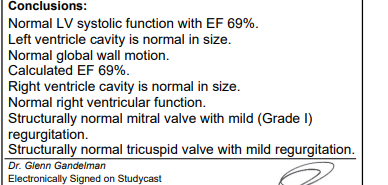
Cardiologist signed Conclusions section of an echocardiogram report, electronically signed by Dr. Glenn Gandelman

The end of a real report. Yours comes the same way: measurements, findings, results, signature.

Who scans, who reads

Two people. Both do this all week.

Emanuel Papadakis
Does every scan
Emanuel Papadakis
RDCS · RVT · 20 years of hospital heart & vascular ultrasound

Certified in both heart and vascular ultrasound. He does every scan himself. It is never handed off.

Dr. Glenn Gandelman
Reads and signs every report
Glenn Gandelman, MD
MPH · FACC · FASE · Board-certified cardiologist

Medical director. He reads every scan and signs every report. Same standard as a hospital, with his name on it.

From patients in Southern Maine

Rated 5.0 by the people we scanned.

5.0
★★★★★
Google reviews
Same equipment that was used in a prestigious DC area hospital.
SB
Sharyn B.
★★★★★Echocardiogram
I received my report within a few hours. Highly recommend.
SA
Shaukat A.
★★★★★
Excellent experience right in my own living room!
ST
Scott T.
★★★★★
Very good service. Very thorough.
KP
Kirk P.
★★★★★
The atmosphere of the office was clean, quiet and calming. I was able to get scheduled quickly and received my results the very next day.
JS
Jennifer S.
★★★★★
Office was clean and quiet, he explained everything before and during the procedure. He was very down to earth and friendly. Made the ultrasound not feel as cold and medical, a much more relaxed feel to the appointment.
NH
Natasha H.
★★★★★
I was brought in on time and was kept informed of what he was doing along with detailed explanations. The room was clean, quiet, and private. I received my results within 48 hours with a follow up email from Manny.
WK
Wanda K.
★★★★★
It is great to be able to know up front the cost of testing and to have complete, accurate results with measurements included to send to my PCP.
BN
Becca N.
★★★★★
Manny was extremely friendly and respectful, I felt very informed and helped by the services he provides in his business.
JC
Julia C.
★★★★★
This process was simple to understand. I felt safe and respected which is huge for me. He talked to me and 40 minutes flew by like that.
MP
Mallory P.
★★★★★
He was very professional, kind, and took the time to explain everything he was doing during the procedure, which really helped put me at ease. I received my results within 48 hours, which was impressive.
MB
Meagan B.
★★★★★
The technologist was professional and made me feel comfortable. It was a breeze to get in and out of the office.
SA
Sam A.
★★★★★

The honest comparison

Why this costs more than a basic screening package.

You have probably seen screenings advertised for less. Here is exactly what you get for that, and what you get here.

A national screening company’s published package · about $186
  • The arteries in your neck — ultrasound
  • The large artery in your abdomen — ultrasound
  • Your heartbeat — a six-lead EKG
  • Your legs — blood pressure cuffs
  • A physician reviews the findings
An EKG checks whether your heartbeat is regular. It does not show the heart.
BlackPoint · $497 during the opening
  • The arteries in your neck — ultrasound
  • The large artery in your abdomen — ultrasound
  • Your heart — a full ultrasound of the heart
  • The chambers, the valves, and how well it pumps
  • A board-certified heart doctor reads it and signs your report
You see the heart working, not just its rhythm.

We do not do the leg test. That time goes into the heart study instead. Package contents and price above are from a national screening company’s own published package page, checked 7 September 2026.

Before you ask

The questions people ask before they book.

Is this really the same as a hospital scan?

Yes. Same kind of machine. Same measurements a hospital lab records. A board-certified cardiologist reads it, and his lab is IAC accredited — the same standard hospital heart labs must meet. The report is a real medical record. You can hand it to any doctor.

Do I need a referral?

No. You book it yourself. Nothing has to be ordered or approved first. That step is where most of the 4–6 months goes.

How fast do I get results?

The heart doctor's signed report is sent to you by secure email within 24 to 48 hours of your scan. Emanuel explains what he sees during the scan itself.

Do you take insurance?

No. BlackPoint is private pay. That is what removes the referral and the wait. One price, told to you before you book. HSA and FSA cards work. You get an itemised receipt. Some patients send it to their insurer for out-of-network money back.

Where do I go?

170 US Route 1, Suite 190 in Falmouth, Maine. Evenings and weekends too. Or we bring the equipment to your home.

While the Falmouth office opens

Three scans, one visit.

A heart scan, a neck artery scan, and an abdominal aorta scan. The heart, the arteries that feed the brain, and the body’s main artery. Three reports, read by a heart doctor, from one 45-minute visit.

  1. ~1 minThe guide and the booking code land in your inbox
  2. Same weekUsually seen within days — evenings and weekends, or at our Falmouth imaging center
  3. 24–48 hThe heart doctor’s signed report, sent to you
Heart scan + neck artery scan $697
Abdominal aorta scan $397
Booked separately $1,094
Grand-opening price $497
You save $597
75 spots at the grand-opening price

The price ends with the 75th booking. Grand-opening visits are being booked now. The code comes with your guide — and the guide is free either way.

Free 8-page guide
Read it first, then decide. Written by the person who does the scans. Checked by the heart doctor who reads them.

* Required

No spam. Unsubscribe in one click. No obligation.
Get the Free Guide